


22 Jun Leveraging CGI to Elevate Food and Beverage Social Media
Food & Beverage • Creative Production

CGI gives food and beverage brands greater control over product visuals, production speed and campaign consistency. It can create scenes that would be expensive—or impossible—to shoot while keeping lighting, packaging and ingredients precise across every channel.
Strong food and beverage social media is no longer optional. Feeds are crowded, thumbs move quickly and a drink or dish has about a second to earn attention. Beautiful visuals must also feel fresh, unmistakably on-brand and designed for the way people actually use each platform.
As a boutique, full-stack marketing team focused on food, beverage, CPG, restaurant and travel brands, we see CGI and 3D as flexible additions to content creation, SEO, AI discovery, email and digital advertising—not replacements for human storytelling.
How CGI Solves Food and Beverage Content Challenges
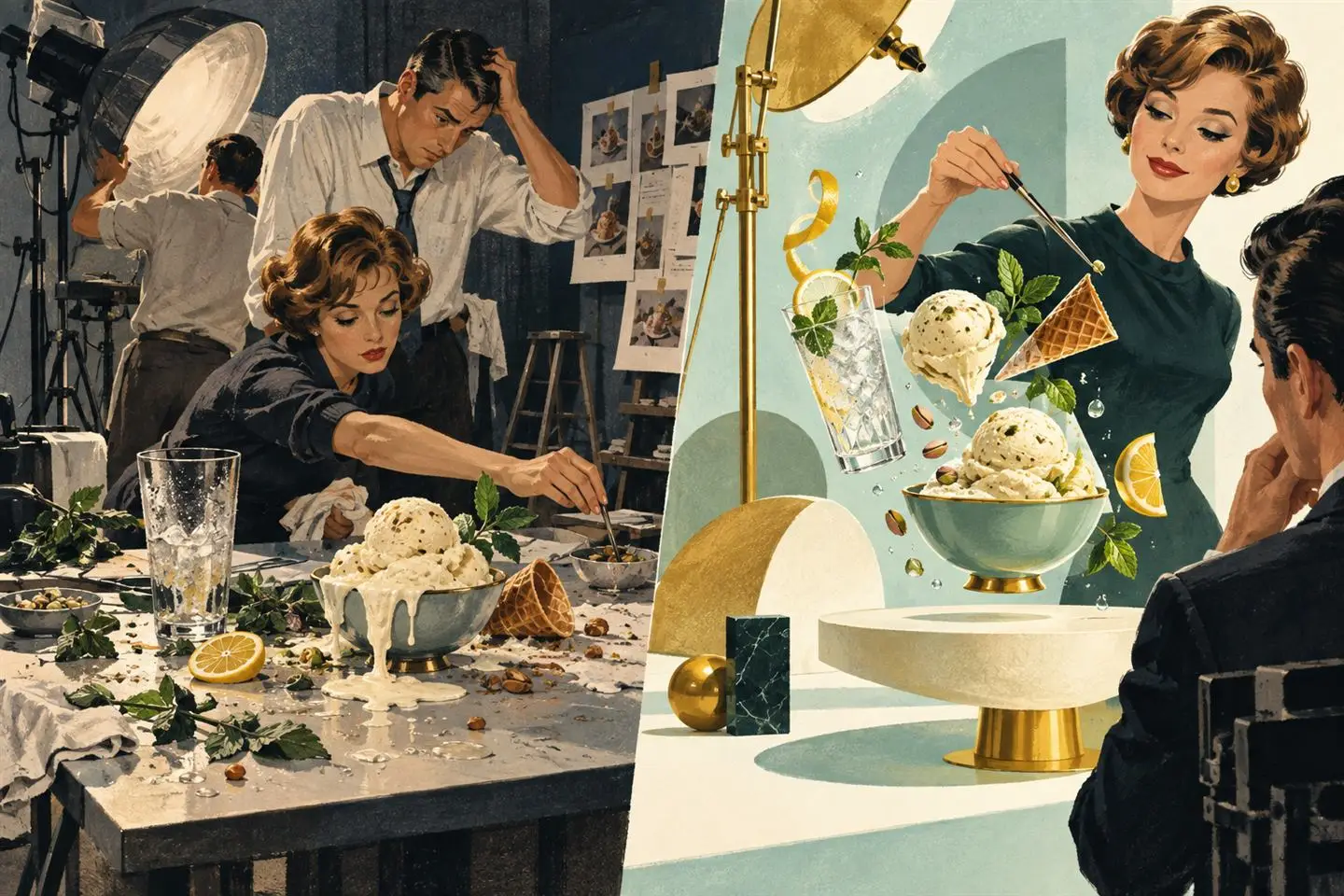
Traditional food shoots fight physics. Ice cream melts. Condensation fades. Herbs wilt. Tiny garnishes fall apart. You are racing the clock and crossing your fingers.
With CGI, you get full control over:
- Lighting and reflections on bottles, cans, and glassware
- Textures like froth on coffee, bubble trails in seltzer, or crumb on cake
- Liquids, pours, splashes, and swirls that would be messy on set
- Packaging details across every size, flavor, and format
Instead of throwing out trays of samples, you reuse digital assets. That means less food waste and fewer last-minute scrambles for fresh product.
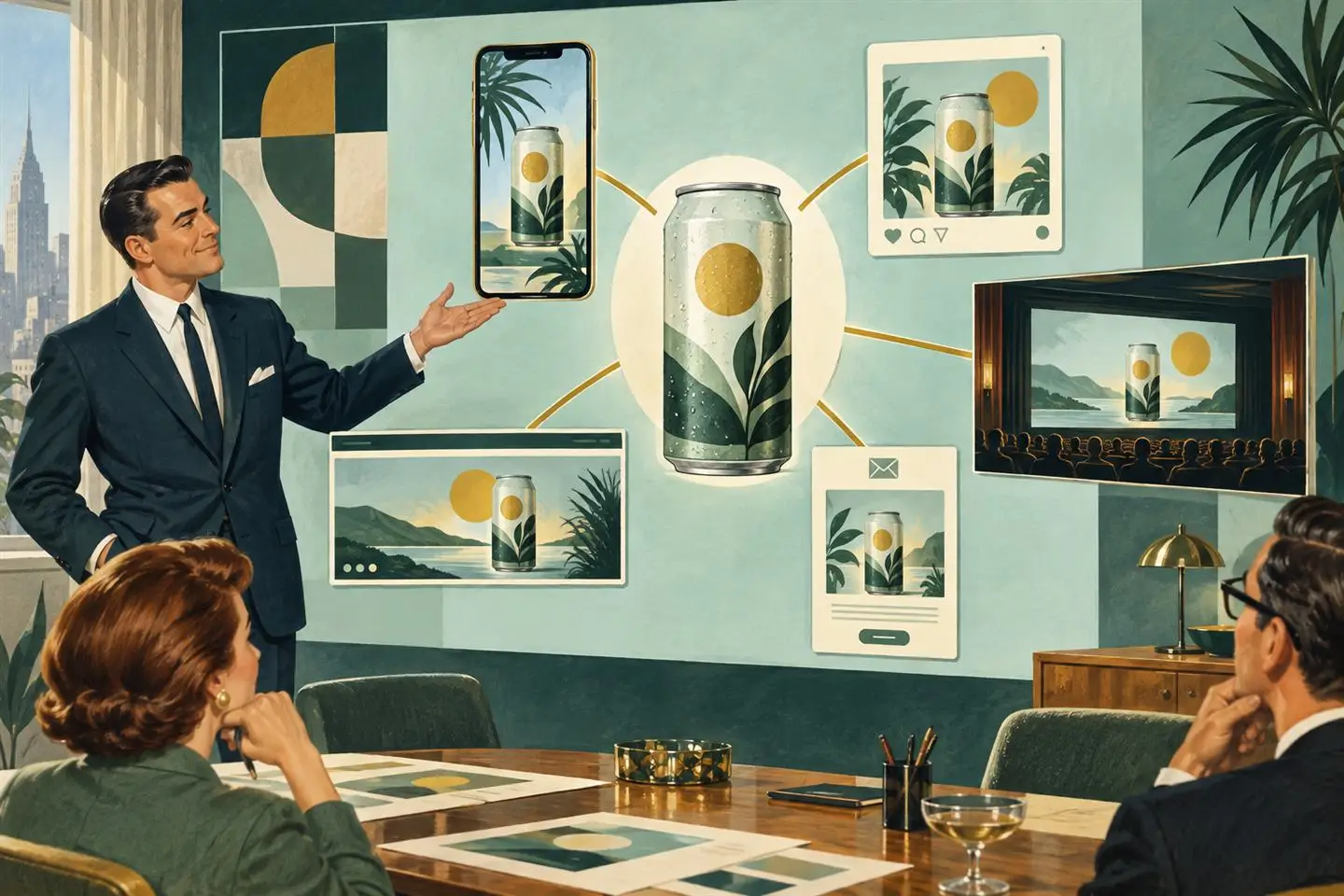
You also get scale without reshoots. One 3D scene can turn into:
- A vertical Reel
- A square feed post
- A banner for your site or menu page
- Frames for CTV or pre-roll video
Need to localize? Update label language, swap seasonal flavors, or shift props to match different regions and cultural moments. The base asset stays the same.
Most important, CGI should never replace story. It should support it. That means:
- Highlighting origin stories, ingredients, or sourcing values
- Explaining ingredients or product features without exaggerating nutrition or functional claims
- Blending CGI with real photography and live-action so the brand still feels human
Designing Scroll-Stopping CGI for Social Media
People do not watch social content the way they watch TV. They skim. They watch on mute. They hold their phone at arm’s length in a bright space. Your CGI has to respect that.
For short-form video, the first frame matters more than anything. Think:
- A bold pour, splash, crack, or break
- A clean product hero locked to the center
- A quick reveal from package to plated moment
Assume sound is off. Use motion, simple supers, and strong contrast to make your story clear with no audio. Keep compositions tight and legible on small screens. Tiny garnish details that look great on a big monitor may vanish in a crowded feed.
To make CGI work long term, build a modular asset library:
- Reusable 3D models of packaging, key ingredients, and brand marks
- Pre-built “scene kits” for holidays, summer BBQ spreads, late-summer picnics, fall flavors, and winter celebrations
- Variants for limited-time offers, co-branded promos, and new menu drops
The goal is hyper-real, not plastic. We aim for:
- Glossy but not fake
- Fresh, real, and on-brand
- Textures you can almost taste: grill marks, char, seeds, foam, sugar crystals
Then we test on real devices before posting to catch color, contrast, and detail issues early.
Connecting CGI to Social Media, SEO and AI Discovery
CGI built for social can do more than live in feeds. It can work hard across your whole digital ecosystem.
Use your strongest CGI stills and loops on:
- Landing pages for seasonal campaigns
- Product detail pages for food and beverage products
- Blog or editorial content around flavors and occasions
Support accessibility and search by writing descriptive alt text, captions, and filenames that accurately explain the image. Think “citrus sparkling water for poolside afternoons” or “grilled veggie skewers for weekend cookouts.”
We also think a lot about generative engine optimization, or GEO. AI assistants and generative search are already changing how people discover brands. Give customers clear information and keep search content accurate with:
- Structured data that matches real SKUs and menu items
- Clear, accurate descriptions paired with your CGI
- Visuals that reflect real packaging, ingredients, and claims
CGI alone does not guarantee an AI citation or recommendation. Pair visuals with useful page content and the search questions your food brand should be answering.
The same CGI assets can then power paid social, display, and email. Keep the creative set consistent from ad to inbox to landing page. That repetition builds recall and makes it easier for people to say yes.
Story-Driven CGI for Restaurants, CPG and Hospitality
Restaurants can use CGI to extend the feeling of the dining room into the feed. Think of:
- A “perfect night out” sequence that flows from bar to table to dessert
- Build-your-own dishes that assemble piece by piece in 3D
- Simple explainers for reservations, waitlists, or pickup flows
For CPG brands, CGI lets you build a whole world around a can, bottle, or snack. You can:
- Place products in stylized summer scenes like tailgates, rooftop hangs, or road trips
- Run recurring “mini-series” around flavors, pairings, or daily rituals
- Keep packaging visuals consistent so shoppers recognize you across every retailer and channel
Travel and hospitality brands can blend destinations with food and drink. For example:
- Airport lounges that highlight a hero beverage
- Resort scenes where signature cocktails and bites share the spotlight with views
- Menus that change frequently, visualized in CGI without constant new shoots
Since we work with food, beverage, restaurants, CPG, and travel-focused brands, we see how these pieces connect in real life, especially in warm, sunny markets where outdoor and on-the-go moments are year-round.
From Idea to Finished CGI Content: A Practical Workflow
Strong CGI content starts with a story-first brief, not a software question. Before anyone opens a 3D tool, we like to clarify:
- Business goals, like trial, reservations, menu awareness, or seasonal lifts
- Priority audiences and platforms, from TikTok food fans to email loyalists
- How CGI will sit next to live-action, UGC, and influencer content
Then we bring the right people into the room early: art directors, 3D artists, food stylists, social strategists, and media planners. Together, we build shot lists that are platform-ready from day one, usually with a vertical-first mindset.
We prefer agile production sprints. Start with a small batch of CGI assets, test them in live channels, look at engagement and click behavior, then adjust angles, motion, or styling.
To keep everything tight, put guardrails in place:
- Clear brand rules for realism, lighting, motion, and ingredient representation
- Legal checks for claims, serving suggestions, and nutrition visuals
- A central asset system so teams know what exists, what is current, and what is seasonal
When all of this clicks, CGI stops being a one-off stunt and becomes a core part of how your food and beverage social media works, from summer launches to evergreen campaigns.
Food and Beverage CGI FAQs
What is CGI in food and beverage marketing?
CGI uses three-dimensional modeling and digital rendering to create product imagery or animation. Brands can control packaging, ingredients, lighting, motion and seasonal settings without rebuilding every scene in a traditional photo studio.
Can CGI replace food photography?
CGI works best as a complement to photography, live-action video and user-generated content. Real imagery preserves the human side of a brand, while CGI expands what a creative team can produce consistently and at scale.
How does CGI support social media and SEO?
One well-planned CGI system can produce platform-specific social assets, campaign landing-page visuals and descriptive images for search content. Clear filenames, accurate alt text and consistent product details help people and search systems understand what each visual represents.
Ready to build a stronger visual system? Meerkat Media Group develops tailored food and beverage social media strategies that connect creative production with measurable marketing goals. Talk with our team about the right approach for your brand.
